


National insurance paid by business on workers aged under 25 should be gradually cut to get more young people into jobs, a major report into youth unemployment is expected to say.
Alan Milburn is set to propose reducing the cost of employer contributions over five years for 21 to 24-year-olds, starting in retail and hospitality, in his review to be published on Tuesday.
The former Labour health secretary will recommend doubling the threshold at which businesses start paying national insurance on earnings from this age group from £5,000 to £10,000, the BBC reported.

He has made clear one of his suggestions will be for a “legal guarantee” of work, training or employment support for young people, with those who refuse to take up the offer potentially losing benefits.
But Mr Milburn is expected to argue that equipping young people with skills is pointless if they cannot go on to access jobs, with changes to national insurance brought in “when economic conditions allow”.
He will say that given the economic backdrop, an immediate blanket reduction in employer NI is not the best way to spend the billions of pounds of public money such a move is estimated to cost.
Ahead of its release, Prime Minister Andy Burnham said the politically sensitive review will be a “watershed” moment but stopped short of promising to accept its recommendations in full.
He has also insisted paying for the reforms would not mean “more money” but “spending differently” in Government.
In an op-ed for the Guardian setting out his own position, Mr Burnham promised “generational” reform with benefits as “the backstop, not the starting point” for young people.
The Prime Minister said Government spending will shift away from “paying for failure” and towards “investing in success” with intervention throughout childhood to help those falling behind.
Amid concerns among some Labour MPs about the extent of future support, Mr Burnham argued that any country focused on the future should make young people “the priority for investment – not the target for cuts”.

But he said this would come with “responsibilities”, writing in an op-ed for the Guardian: “If we give young people genuine opportunities to learn, train and work, we should expect them to take them where they can.
“Benefits must become the backstop, not the starting point. The system will no longer begin by establishing which benefits a young person is entitled to receive.
“It will understand their ambitions and identify the help they need to achieve them.”
Mr Milburn’s independent report is expected to offer a radical overhaul of the welfare system to tackle the rise in the number 16 to 24-year-olds not in education, employment or training (Neets), which topped a million this year.
The crisis could take a decade and billions of pounds to resolve, Mr Milburn has said, arguing that “crude cuts” would merely result in young people showing up elsewhere in the Government ledger.
Mr Milburn said some young people would receive less financial support under his proposals, which include moving them off some health-related benefits and onto a new “youth allowance”.
This would instead be paid at the standard rate of universal credit, while under a separate recommendation the Government would have a “legal” duty to guarantee under-25s a job, employment support or training.
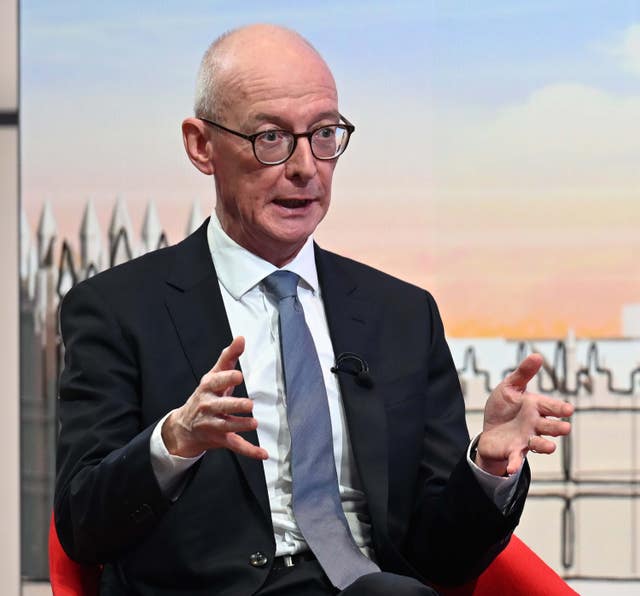
Work and Pensions Secretary Pat McFadden said some young people will receive fewer benefits in future amid questions about the scope of any potential tightening of welfare eligibility following the review.
But he backed Mr Milburn’s proposal of a “legal guarantee” for young people, arguing that employment support needed a “legislative underpinning” with people given “more certainty about what they’re entitled to”.

Ministers will be hoping to head off opposition from backbenchers after Sir Keir Starmer’s government was forced to water down proposed welfare cuts last year in the face of a Labour rebellion.
Speaking on Sunday, Mr McFadden argued the Government must make reforms not “in spite of being Labour people”, but “because we’re Labour people”.
“It’s a different proposition from last year, and I hope that Parliament views it in that light,” he told Sky News’ Sunday Morning show.
Shadow work and pensions secretary Helen Whately said the creation of legal entitlement “might sound a nice thing to do” but “doesn’t make sense”.
But the Tory frontbencher tentatively backed other elements of Mr Milburn’s approach, saying his focus on moving away from “handing out cash for relatively mild conditions” and towards employment support was “the right direction of travel”.
Reform UK’s Danny Kruger similarly said he was “encouraged” by “the suggestion that we need to be much stricter about benefits for young people who should be supported into work or should be working”.
But he added that he did not expect Labour backbenchers to accept this.


Share