


German chancellor Friedrich Merz faces a struggle to stabilise his position and keep his agenda on track after voters inflicted two more defeats on his party, ejecting it from a state legislature for the first time.
The unpopular Mr Merz vowed to stay on and push through reforms to Germany, Europe’s biggest economy, minutes after polls closed on Sunday in regional elections in Berlin and in Mecklenburg-Western Pomerania, a largely rural eastern region on the Baltic Sea coast.
Final results underlined the extent of what Mr Merz conceded was a “disaster” in Mecklenburg-Western Pomerania.

His centre-right Christian Democratic Union (CDU) fell just below the 5% of the vote needed to keep seats in the regional parliament, the first time that has happened in 77 years of modern Germany’s federal republic, after losing more than half its support.
The CDU also dropped to second place in Berlin behind the hard-left Left Party, which is in pole position to lead the next city government – though Mr Merz’s party could, depending on how coalition talks go, still retain city hall.
But after days of speculation about Mr Merz’s future, there were no prominent public calls on Monday for his departure and no sign of a challenge.
The chancellor said no-one raised any “personnel questions” in party leadership meetings on Sunday or Monday.
“It is the historic task of the (governing) coalition here in Berlin and the political centre as a whole to make our country fit for the coming years,” Mr Merz said.
“Extremists suggest that there are easy solutions. But everyone who has ever governed knows there are no easy solutions.”
At the same time, he acknowledged that the CDU needs to work on its profile.
Mr Merz said that it “no longer has satisfactory answers to too many questions, and we will and must change that”.
Neither of the states that voted on Sunday is one of Germany’s political heavyweights. The CDU’s 2023 win in Berlin was its only one in the past 25 years in the capital, which has tended to lean left, and the party was already weak in Mecklenburg-Western Pomerania.
But the manner of its defeat in the latter in particular adds to the headwinds Mr Merz faces after a stinging defeat by the far-right Alternative for Germany (AfD) two weeks ago in Saxony-Anhalt, another region in the formerly communist east, damaged his authority and triggered speculation that he might be replaced.
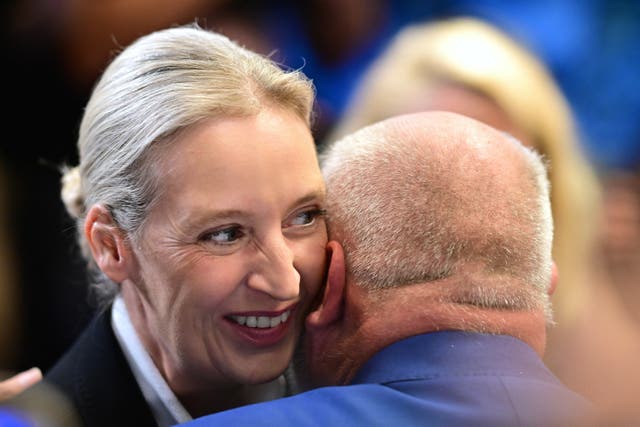
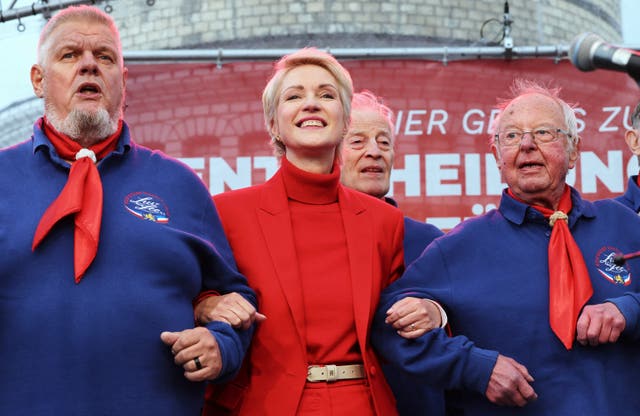
AfD emerged as the strongest party in Mecklenburg-Western Pomerania, but the centre-left Social Democrats – the junior party in Mr Merz’s national governing coalition – were fairly close behind after a campaign focused squarely on the state governor, Manuela Schwesig, as a bulwark against the far-right party. That polarisation helped squeeze other mainstream parties, including the CDU.
A left-leaning three-party coalition under Ms Schwesig would have a majority in the new regional legislature.
Ms Schwesig and others in the governing parties have cast doubt on aspects of the federal government’s reform agenda, which is meant to bolster a chronically sluggish economy.
The reform plans include a potentially painful overhaul of the creaking pension system, a reduction of Germany’s stifling bureaucracy and cuts to income tax for low- and middle-income families.
The head of the Social Democrats’ group in the national parliament, Matthias Miersch, said it was clear that “we need reforms”. But he told ARD television that “we must also take people’s concerns seriously”.
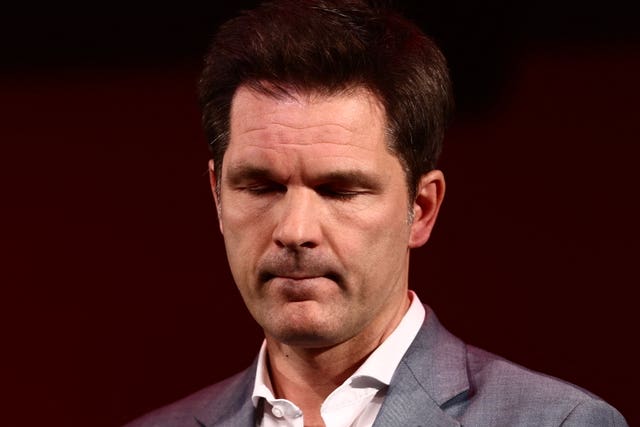
Mr Merz faces more meetings on Monday with his party’s leadership. Much will depend on the CDU’s influential regional leaders; the party’s eight state governors last week backed the chancellor, though questions remained about how whole-hearted their support was.
There are no more electoral tests for the chancellor this year. However, five state elections are scheduled next year, three of them in April.
They include one in North Rhine-Westphalia, Germany’s most populous state, currently led by a prominent CDU figure often cited as a possible successor to Merz, Hendrik Wüst.
None of the five elections is in the east, where AfD is strongest.


Share